


Introduction
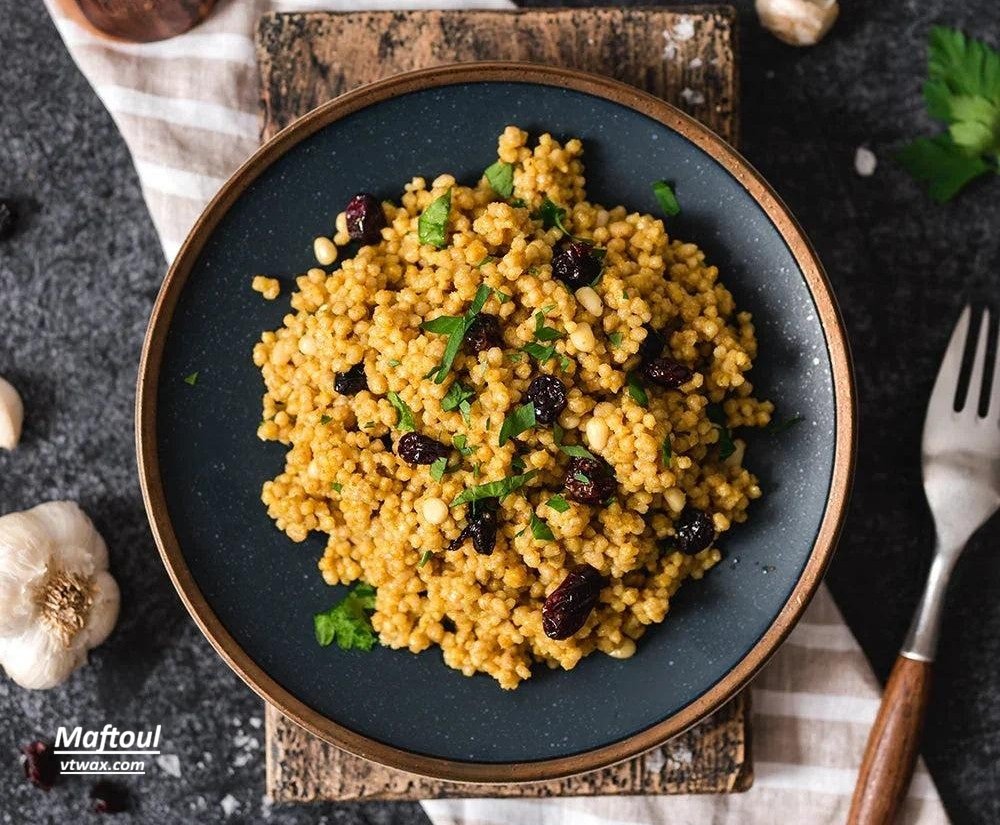
Maftoul is a traditional Palestinian hand-rolled grain celebrated for its hearty texture, comforting flavor, and deep connection to Palestinian culinary heritage. Often described as “Palestinian couscous,” maftoul has a distinctive appearance and preparation method that set it apart from the finer couscous commonly associated with North African cuisine.
For generations, it has been prepared for family meals, celebrations, and gatherings. Its nutty flavor and ability to absorb rich broths make it a satisfying base for vegetables, chickpeas, and meat. Although traditional recipes vary between families and regions, the basic idea remains the same: small grains are carefully rolled, steamed, and served with flavorful ingredients.
What Is Maftoul?
Maftoul, also spelled m’foul or maftul, is a Palestinian grain traditionally made by rolling bulgur wheat and wheat flour or semolina into small, round pieces. The word is associated with the Arabic concept of rolling or twisting, reflecting the traditional method used to create its characteristic shape.
Unlike instant couscous, which is generally produced from semolina and mechanically formed into tiny granules, traditional maftoul is considerably larger and has a more substantial texture. It is usually steamed before being served and is often cooked or finished with broth to develop its rich flavor.
It is particularly valued because it works well with savory sauces and broths. The grains retain their texture while absorbing the flavors of the dish, making every bite hearty and aromatic.
What Kind of Food Is Maftoul?
Maftoul is a staple grain-based food commonly served as part of a main meal. It can be considered similar to other grain dishes that are used as a foundation for vegetables, legumes, meat, or sauces.
In Palestinian cuisine, this is frequently paired with chickpeas, onions, tomatoes, and aromatic spices. Chicken is another popular addition, particularly in festive or family-style preparations. Some versions are made entirely with vegetables, making maftoul a versatile choice for plant-based meals.
Its firm, slightly chewy texture makes it different from rice and finer couscous. Rather than being light and fluffy in the same way as small couscous grains, it has a satisfying bite and a slightly earthy, nutty character.
How to Make Maftoul
Making a traditional maftoul dish involves preparing the grains, developing a flavorful broth, and combining the ingredients.
First, the maftoul grains are prepared for steaming. Traditional this is often steamed rather than simply boiled. This process allows the grains to cook gradually while maintaining their distinctive texture.
Meanwhile, a broth can be prepared using chicken, vegetables, onions, tomatoes, chickpeas, and spices. The ingredients are simmered together so that their flavors combine. Depending on the recipe, chickpeas may be cooked separately and added later.
Once the maftoul is steamed, it can be combined with some of the flavorful broth. This allows the grains to absorb the savory liquid without becoming overly soft. The finished maftoul is then served with the chickpeas, vegetables, chicken, or other toppings.
For a simpler home preparation, commercially produced it can be cooked according to its package instructions and then combined with a homemade broth. Although this is more convenient than traditional hand-rolling, it can still produce a flavorful and satisfying meal.
Key Ingredients and Their Roles
Traditional maftoul dishes can contain several ingredients, each contributing to the final flavor and texture.
Maftoul grains
The main ingredient, providing a hearty, chewy texture.They serve as the flavorful base for the entire dish.
Bulgur wheat
Traditionally incorporated into the hand-rolling process, bulgur contributes a distinctive wheat flavor and substantial texture.
Semolina or wheat flour
Helps shape the it grains during preparation.It binds the ingredients together and gives the grains their texture.This is an essential part of the traditional hand-rolling process.
Chickpeas
Chickpeas add protein and a creamy texture to maftoul, creating a delicious contrast with the chewy grains. They also make the dish more filling, nutritious, and satisfying.
Onions
Cooked onions add natural sweetness to maftoul. They enhance the dish with rich, savory flavor. They also provide extra depth and aroma.
Tomatoes
Tomatoes add a fresh, slightly tangy flavor to maftoul while bringing vibrant color and richness to the broth or sauce. They also help balance the savory flavors of the dish and make it more flavorful and appetizing.
Chicken or vegetables
Chicken or vegetables add extra flavor and nutrition to maftoul. They complement the grains with savory and wholesome ingredients. Together, they turn this into a complete and satisfying meal.
Spices
Common seasonings may include cumin, coriander, cinnamon, black pepper, and other regional spice combinations.
The exact ingredients differ according to family traditions and regional cooking practices.
What Is the Difference Between Maftoul and Couscous?
Although maftoul is often called Palestinian couscous, it is not exactly the same as conventional couscous.
The main difference is the ingredients and production method. Traditional couscous is generally made from semolina, while traditional maftoul is associated with bulgur wheat and wheat-based ingredients. It grains are also typically larger and more visibly rounded.
Texture is another important difference. Couscous tends to have a light and delicate texture, while maftoul is larger, chewier, and more substantial. Because of its size and structure, maftoul holds up particularly well when cooked with broths and hearty sauces.
Their culinary traditions also differ. Couscous is strongly associated with the cuisines of North Africa, including Morocco, Algeria, and Tunisia. Maftoul, meanwhile, is deeply rooted in Palestinian cuisine and is also enjoyed in neighboring parts of the Levant.
Therefore, while the two foods are related in appearance and cooking concept, it has its own distinctive culinary identity.
How Is Maftoul Traditionally Rolled and Prepared?
Traditional maftoul preparation is a hands-on process that requires patience and skill. The grains are traditionally formed by rolling bulgur wheat with wheat flour or semolina and water. Small portions are rolled between the hands to create rounded grains.
The process may involve gradually adding flour or semolina while rolling until the desired size and consistency are achieved. Once formed, the grains are dried or prepared for steaming, depending on the particular traditional method.
Steaming is an important part of traditional preparation because it cooks the grains gently while preserving their firm texture. Historically, it was often prepared in larger quantities, making it especially suitable for family meals and special occasions.
Today, many people purchase ready-made this from shops, making it much easier to prepare at home. However, the traditional hand-rolling process remains an important part of Palestinian food heritage because it reflects the time, craftsmanship, and communal nature of traditional cooking.
Conclusion
Maftoul is much more than a grain that resembles couscous. It is a distinctive Palestinian food with a rich culinary history, satisfying texture, and remarkable ability to absorb flavorful broths. Made traditionally through a careful hand-rolling and steaming process, maftoul represents both practical home cooking and an important part of Palestinian food culture.
Whether served with chickpeas and vegetables, paired with chicken, or prepared as a simple vegetarian meal, it offers a hearty and versatile alternative to rice and conventional couscous. Understanding how it is made and how it differs from couscous makes it easier to appreciate the unique character of this beloved Palestinian dish.
